
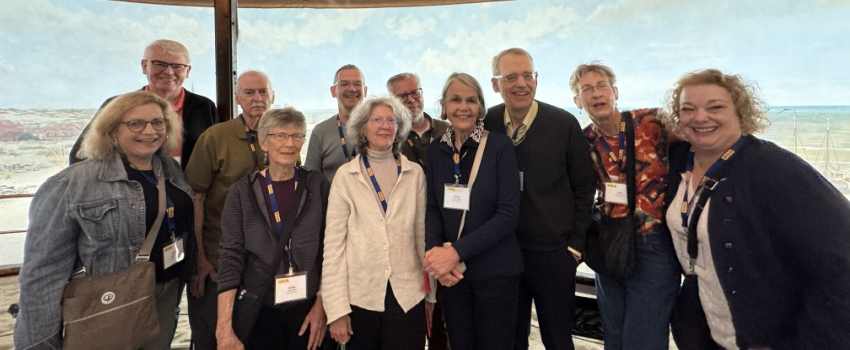
Your family’s past deserves to be walked through, not just filed away. Last week, I had the privilege of doing exactly that — not with a single client, but with a whole group of them at once.
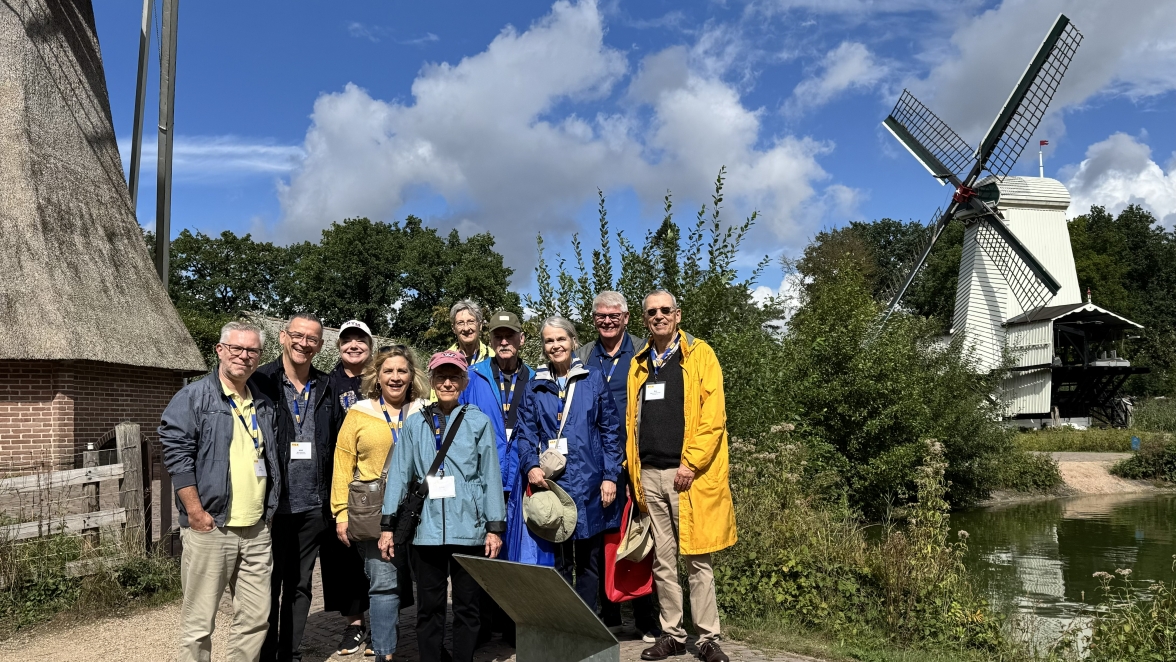
For five intensive days, I helped guide a heritage travel group from the New York Genealogical & Biographical Society (NYG&B) on a journey through the Netherlands (like I did in 2024). The participants came from every corner of the United States, all descendants of Dutch migrants, wanting to get to know the country their ancestors came from.
This is the kind of trip I love most, because it proves a point I make to clients all the time: genealogy is not only what you find in a document. It’s also what you feel when you walk in the places, streets and buildings that your ancestors once visited.
Arnhem: Farms, Mills, and the Rhythms of Rural Dutch Life
Day one took us to the Netherlands Open Air Museum in Arnhem, where a guide took the group past historic farmhouses and windmills. The demonstrations of oil pressing and traditional papermaking especially drew a crowd.
Leiden: Following the Pilgrims
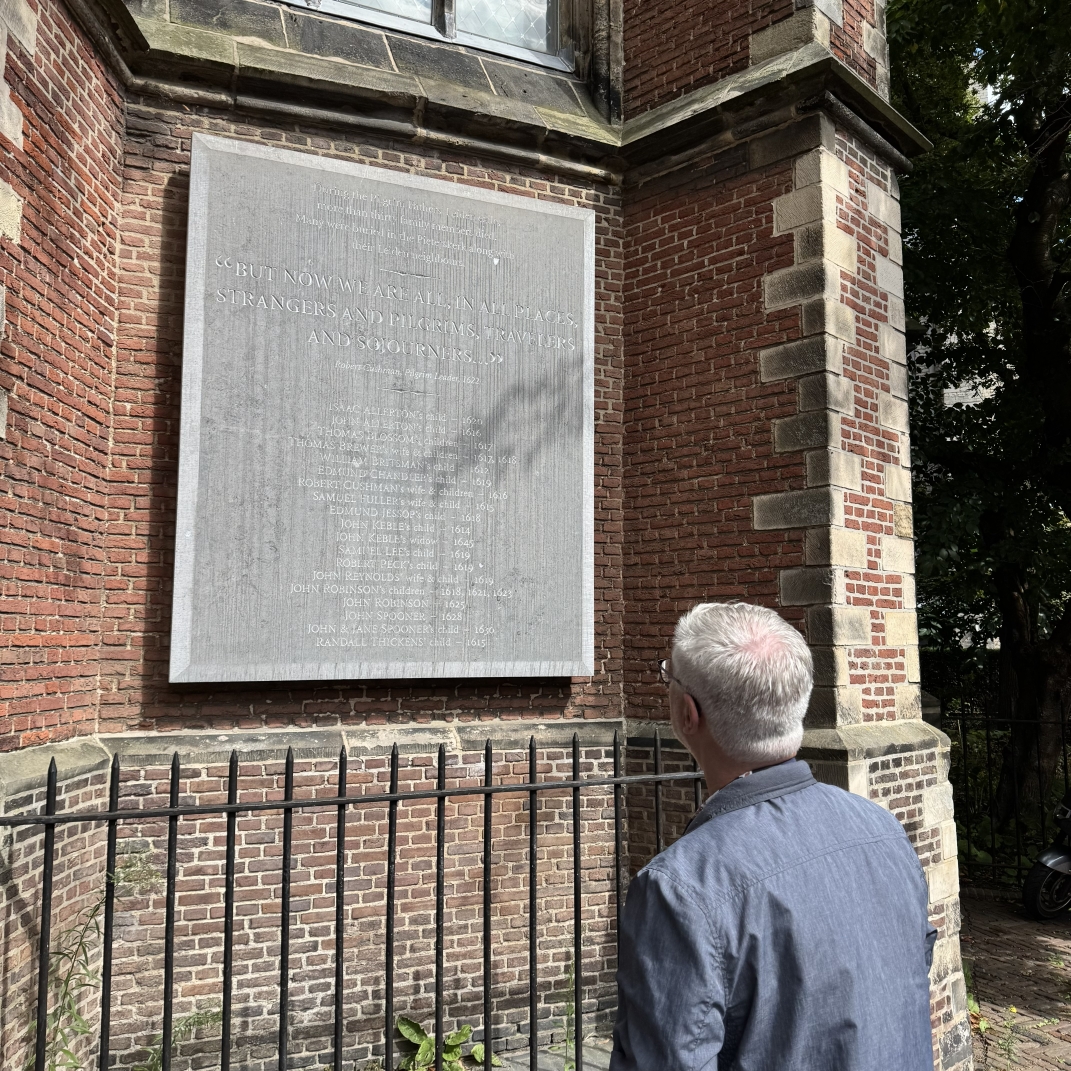
Day two brought us to Leiden, a city with a very particular resonance for American visitors: the Pilgrim Fathers, an English group of religious emigrants, lived here for several years before crossing the ocean in 1620 to found the New England colony. The Pilgrim Fathers are seen as the founders of what would later become the United States, and many Americans count them among their ancestors. We visited the Pieterskerk, which still holds many reminders of that history.
From there, a guided tour of Leiden University’s historic Academy Building took us through the portrait gallery and the “sweat room,” where for centuries students signed their names while waiting for their graduation results or when receiving their honorary doctorate — among them Winston Churchill, Nelson Mandela, and our current king, Willem-Alexander.
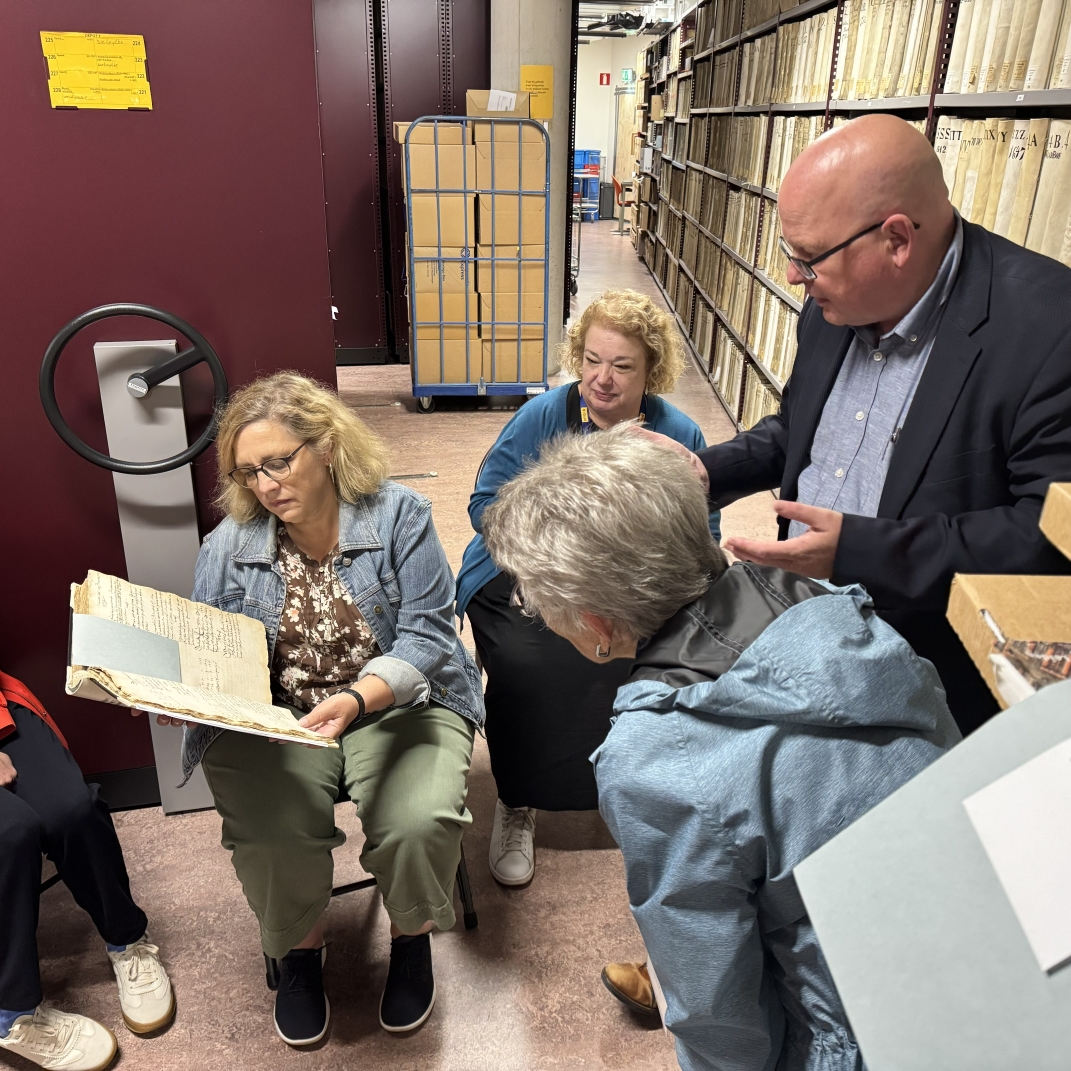
In the afternoon, we were expected at the Leiden City Archives, where the city archivist showed us a variety of historical documents, often related to the Pilgrims. Some participants saw the names of their own ancestors. We were also invited to guess who had written two short notes shown to us. It turned out to have been Rembrandt!
Rotterdam and Delfshaven: The Point of Departure
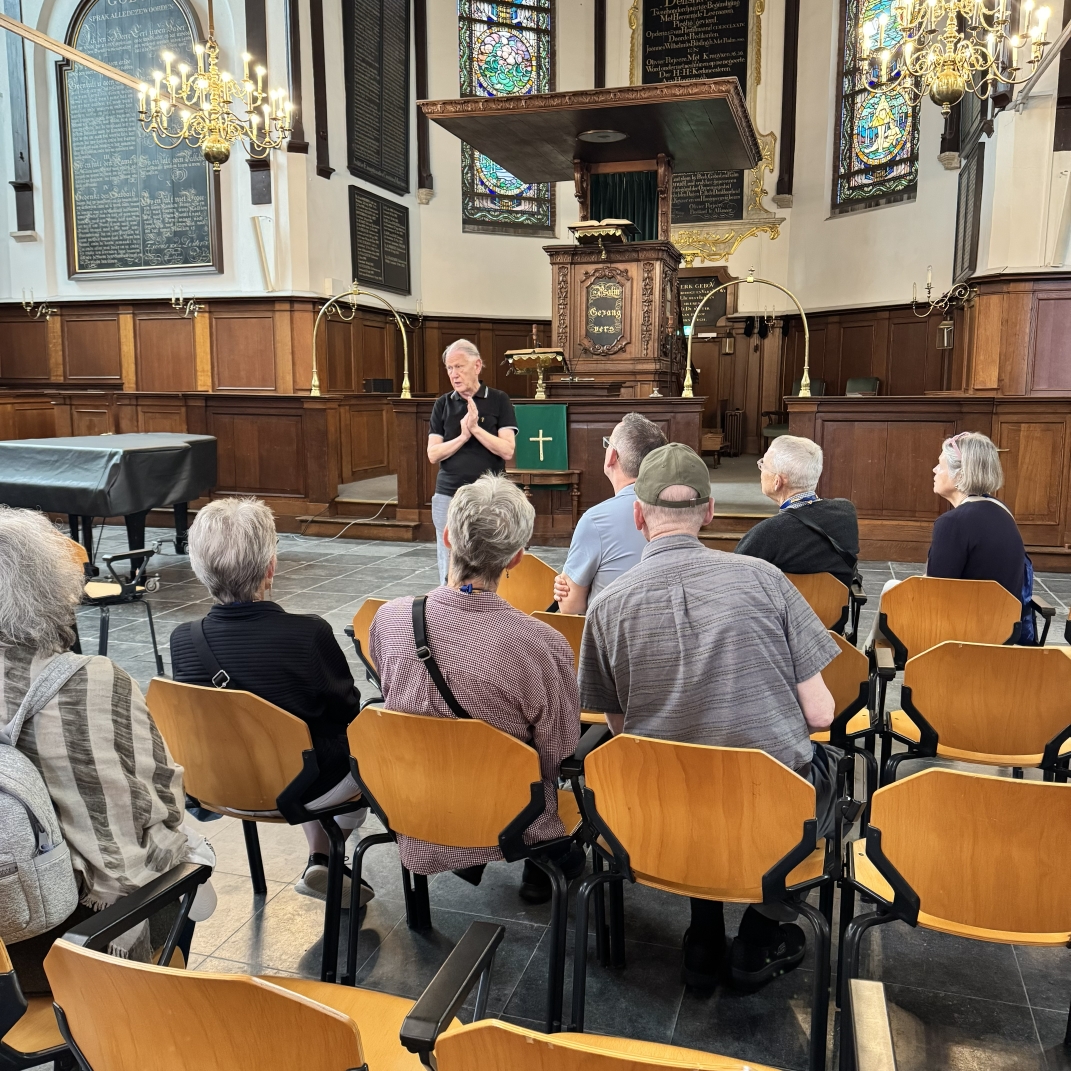
Day three took the group to Rotterdam, with a first look at the Erasmusbrug, Willemsbrug, Hotel Amerika, and the Cube Houses from the bus, before we were dropped off in Delfshaven — the place from which the Pilgrims departed for the United States in 1620. Our guide, Nico, showed us the church, told us various facts about the Pilgrims, showed a short video, and afterward took us to see the old harbor of Delfshaven.
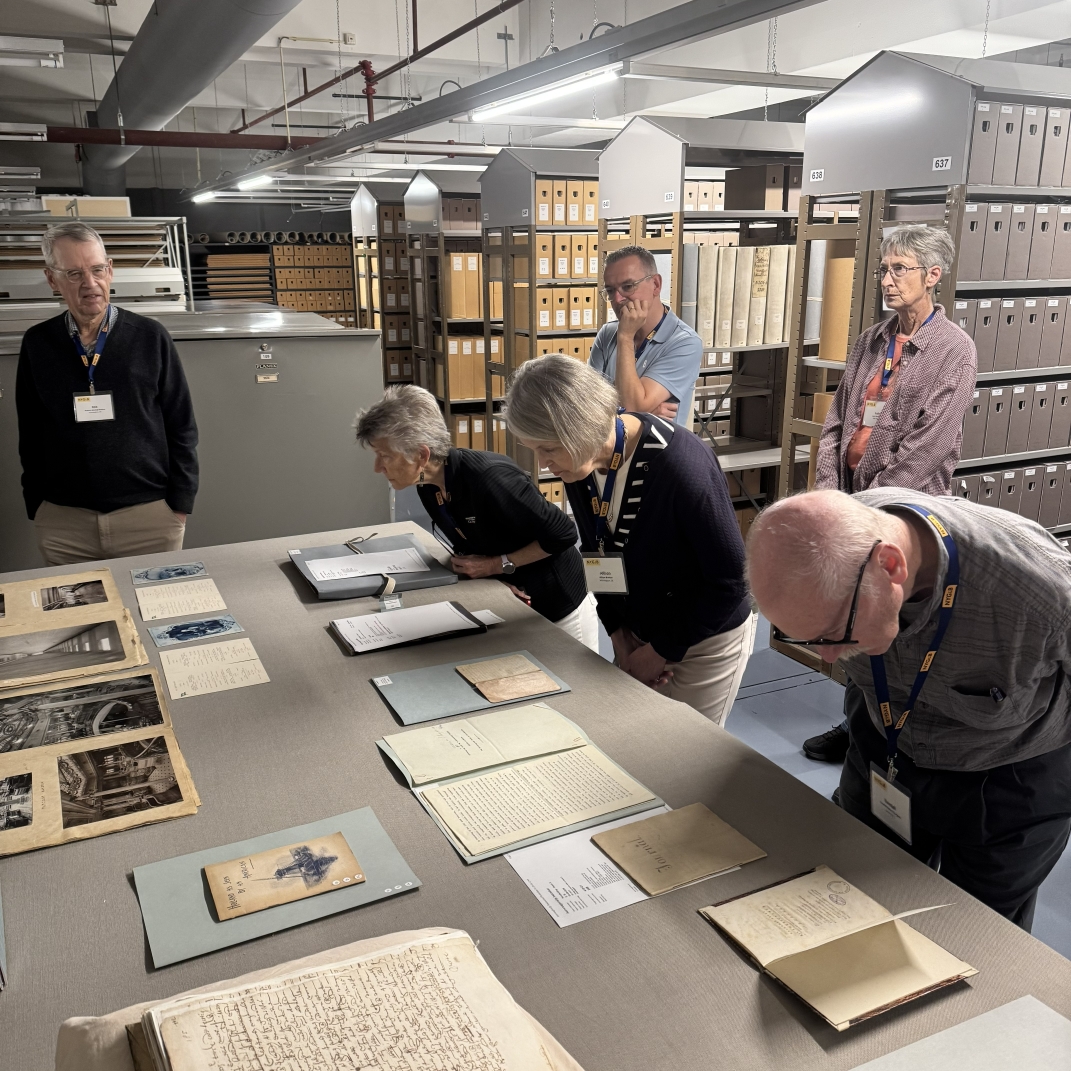
Over lunch at the Groot Handelsgebouw, I gave the group a presentation on genealogical research in the Netherlands. In the afternoon, we visited the Rotterdam City Archives, where staff gave a presentation on the archive’s work, showed us the restoration studio and one of the depots, and had prepared material connecting the Netherlands to the United States: a notarial deed from 1662, a diary from 1851, and photographs from the Holland America Line dating to 1915.
The Hague and Scheveningen: Art
Day four took us to Panorama Mesdag, where we viewed the paintings made by Hendrik Willem Mesdag and his wife Sientje, including the 360-degree panorama of The Hague and the beach at Scheveningen. In the afternoon we visited Museum Bredius — a second choice, since the Mauritshuis is currently closed for several weeks for the installation of a new climate system. An art historian told us about the museum’s former owner, Abraham Bredius, and his collection of seventeenth-century paintings, including two paintings and several sketches by Rembrandt, and a perspective box that offers a surprising view through a small opening.
Amsterdam: Full Circle
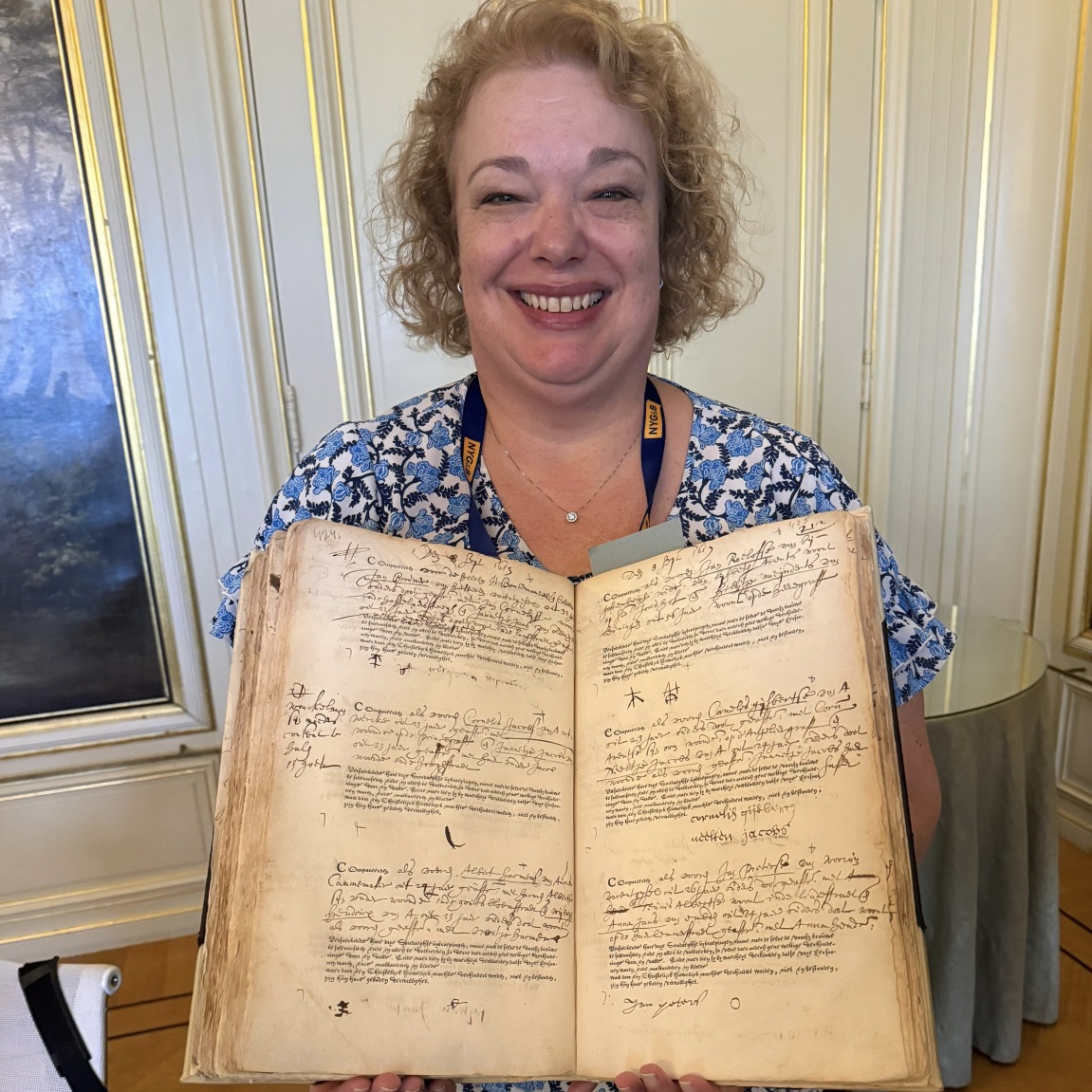
The week closed back in Amsterdam, at the Amsterdam City Archives, housed in a former bank building complete with a vault and a “royal room.” Archive staff talked about several websites (including the NYG&B website for the New Netherland Settlers Project) and showed us archival material related to the relationship between Amsterdam and Nieuw Amsterdam — the later New York. They had also found documents relating to the Amsterdam ancestors of two of the participants, who were each photographed with a document.
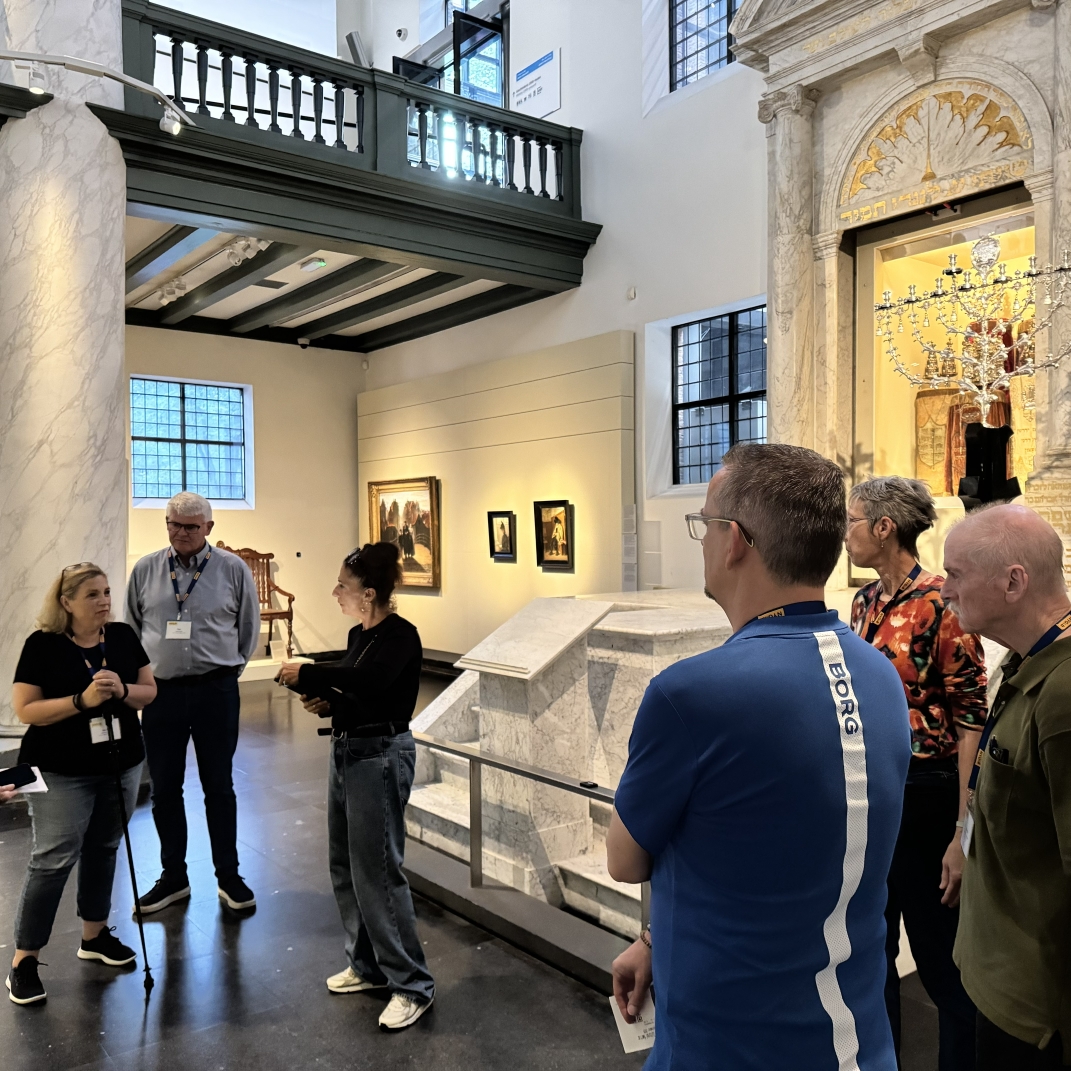
The afternoon brought us to the Jewish Cultural Quarter, where a tour through the history of Amsterdam’s Jewish community rounded out a week that had, by then, covered farms, churches, universities, archives, and museums in equal measure.
Why This Kind of Trip Matters
What struck me most, watching this group move through five very different cities, was how naturally the genealogical and the cultural reinforced each other. A document in an archive gains meaning once you have stood in the church where your ancestor was baptized, or walked the harbor from which they sailed. And a historic building or landscape becomes personal once you have seen your own family’s name attached to it.
This is exactly the kind of experience Antecedentia can help design and guide — whether for an individual tracing a single family line, or for an organization like the NYG&B bringing a whole group of descendants back to the country their ancestors left behind. If your society, historical group, or family has Dutch roots and you’re curious what a trip like this could look like, I’d be glad to talk it through.


